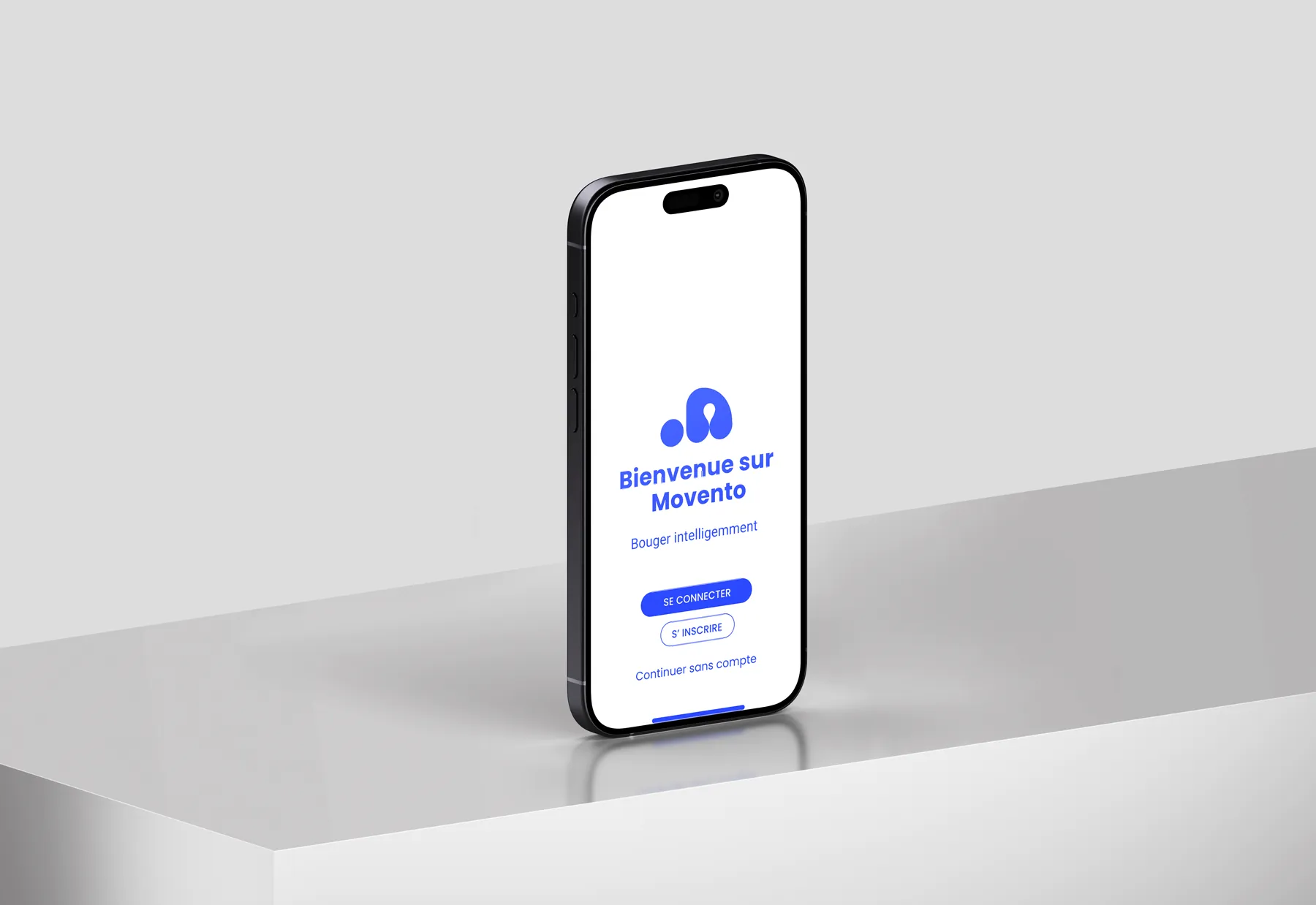
Selected Work 03 02 02 02 The purpose of Movento The Movento app aims to make athletes aware of the importance of warming up properly and to help them better understand the pain that can occur when an exercise is performed incorrectly. Its goal is to help users understand where this pain comes from and the potential risks associated with it.
Why this topic? As an amateur athlete, I have unfortunately suffered several injuries during training sessions. Following these injuries, I tried to understand their causes by watching videos, reading the opinions of athletes more experienced than me, talking with my coach, and seeking advice from physiotherapists and osteopaths.
It was after these valuable conversations that I realised how important it is to listen to your body, and therefore to stop following the "no pain, no gain" approach that is quite common in some sporting circles. I obviously wish I had had all this valuable advice before I started training, which is why I wanted to develop this application.
My research The target audience is beginner athletes of all ages.
Indeed, those most likely to get injured are generally beginners, due to their lack of experience and technique in their movements.
I was then able to interview various beginner athlete profiles, which showed me that 60% of the target audience is willing to do preventive exercises rather than have pain treated by a professional. As mentioned earlier, I had also already spoken with a few physiotherapists, who confirmed that young people and men are among the groups most at risk of injury. The overall injury rate is significantly higher among men than among women.
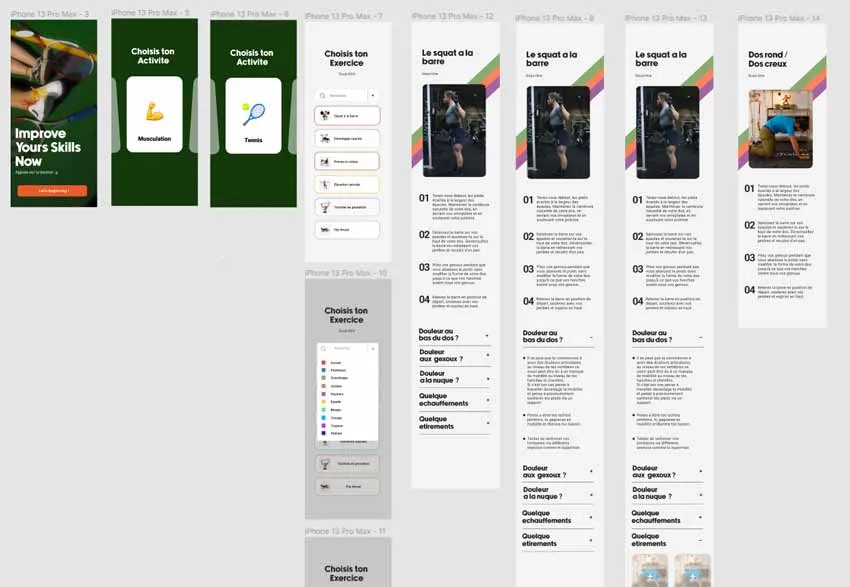
Feature design and the issues it raised. Following this research, it was time to imagine a few features and sketches, and to put them to the test using personas.
Activity and exercise filters Pages explaining the technique of each exercise Dropdown covering potential pains and injuries Dropdown listing stretches Dropdown listing warm-ups After analysis, I identified several issues that led me to question the direction of my project. Above all, it lacked clarity. In addition, the topic of pain, which should have been our main focus, was relegated too far into the background, and attention was concentrated more on technique. That is certainly a good thing, but there was a clear lack of explanation as to why a given technique can be painful.
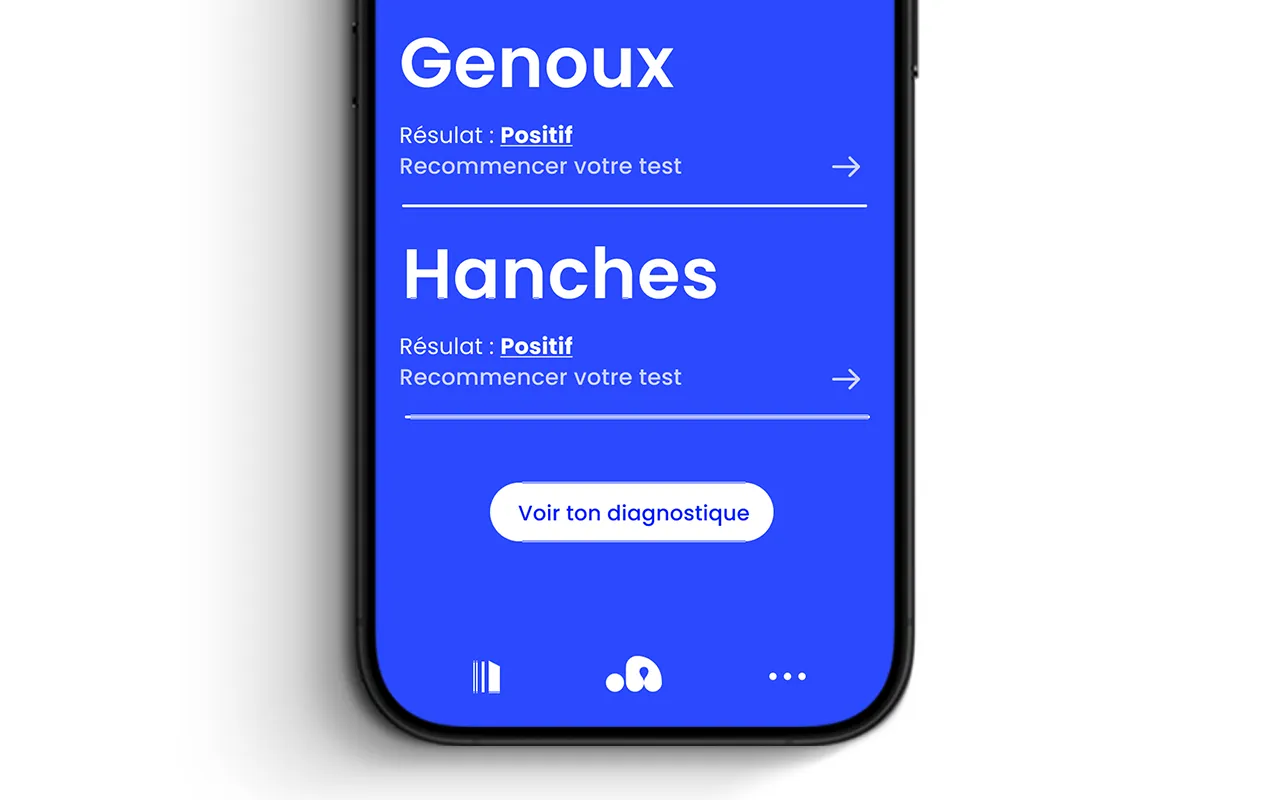
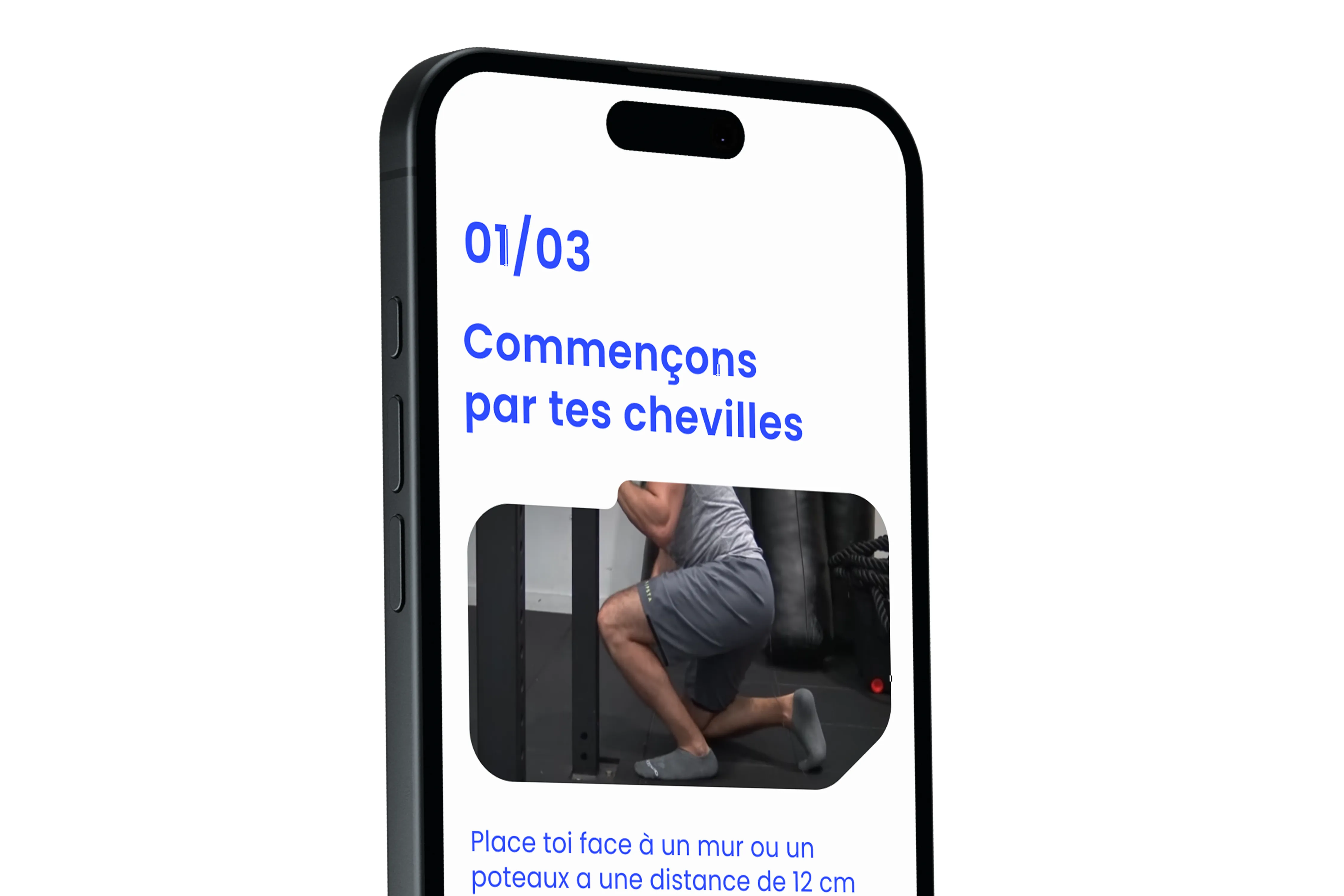
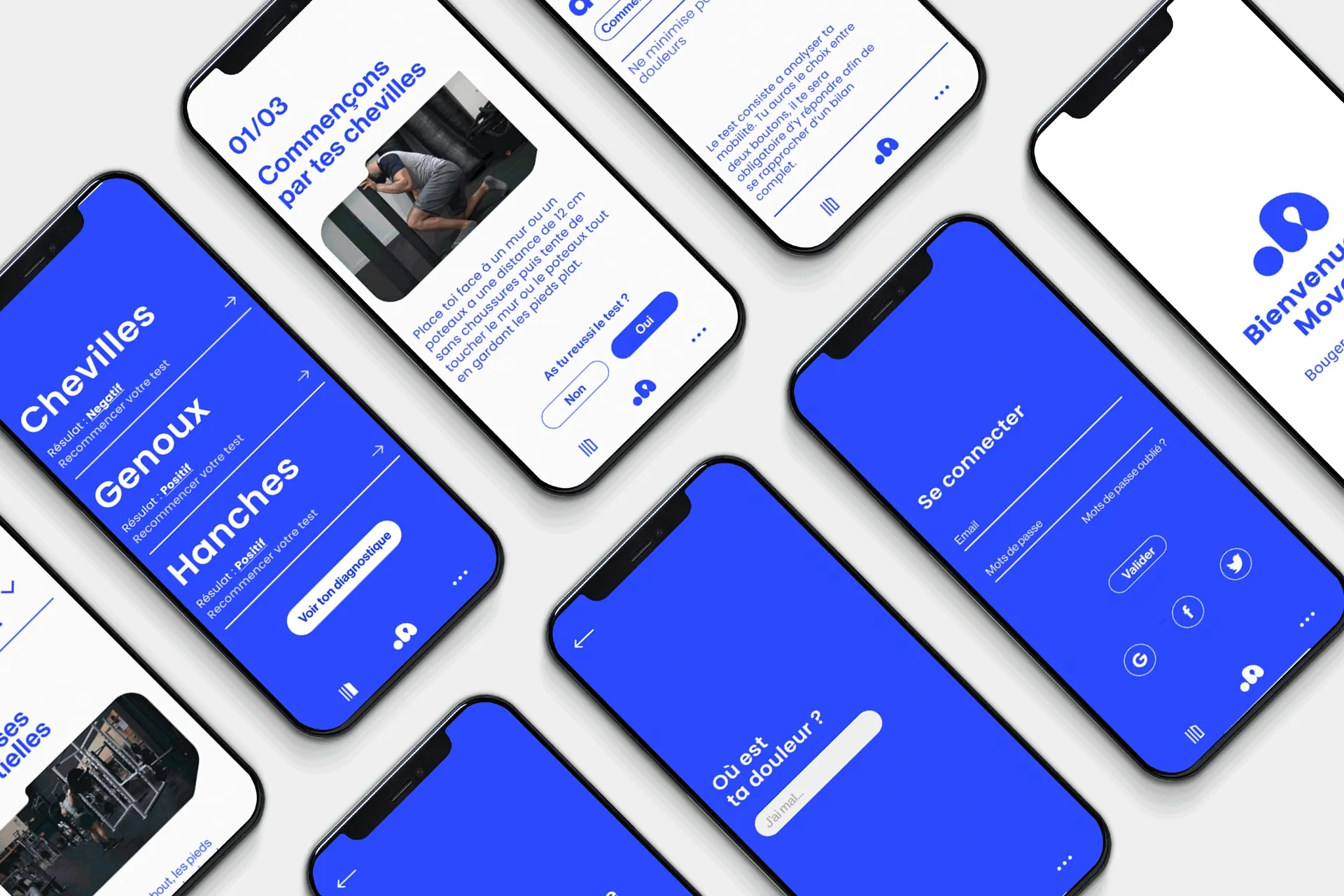
To solve this problem, I continued my research and my interviews with various physiotherapists. I found a solution by developing a smart questionnaire similar to a multiple-choice quiz. Through a series of tests, it can identify possible biomechanical weaknesses in the user's body. As a result of this change, I had to revise my features as follows:
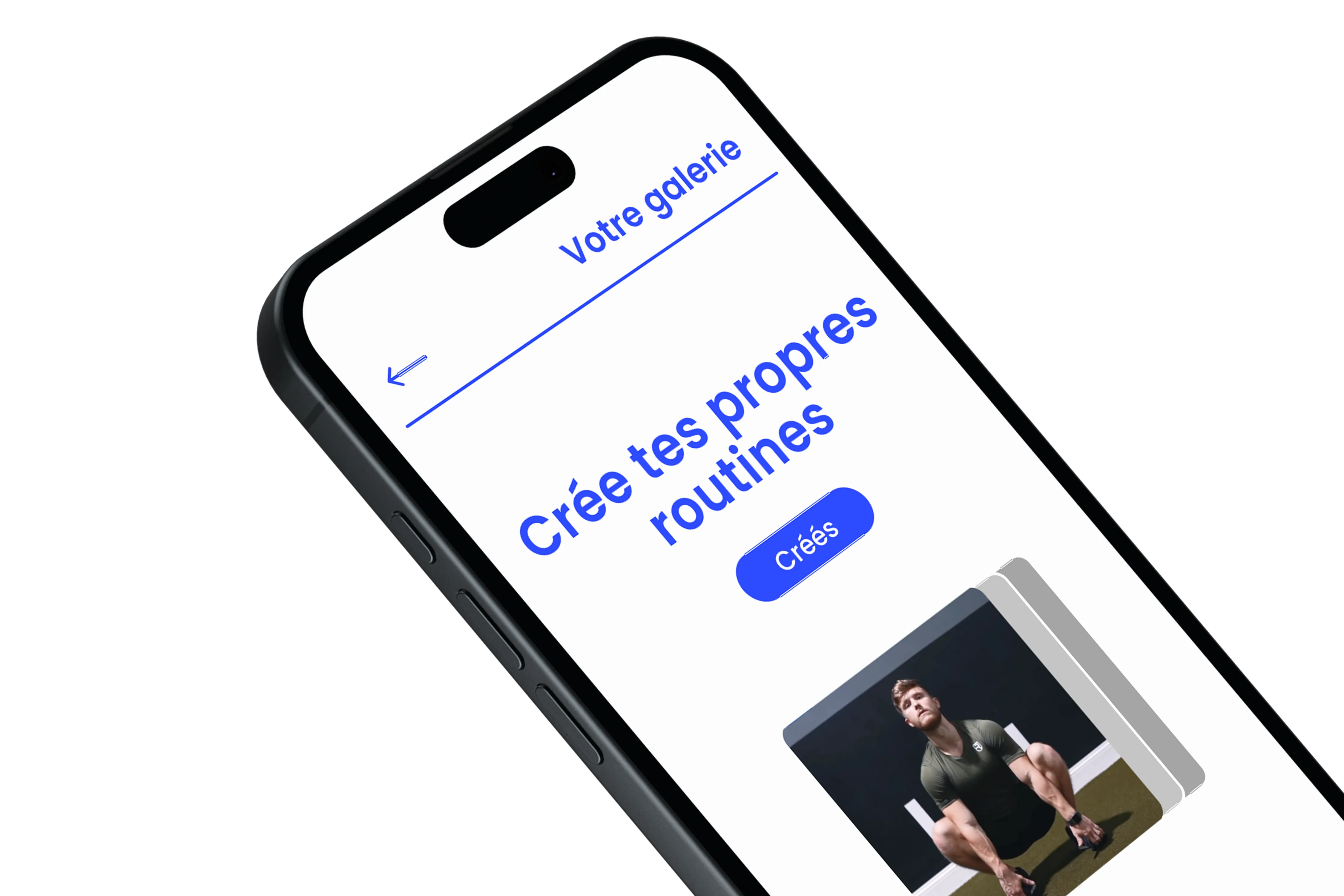
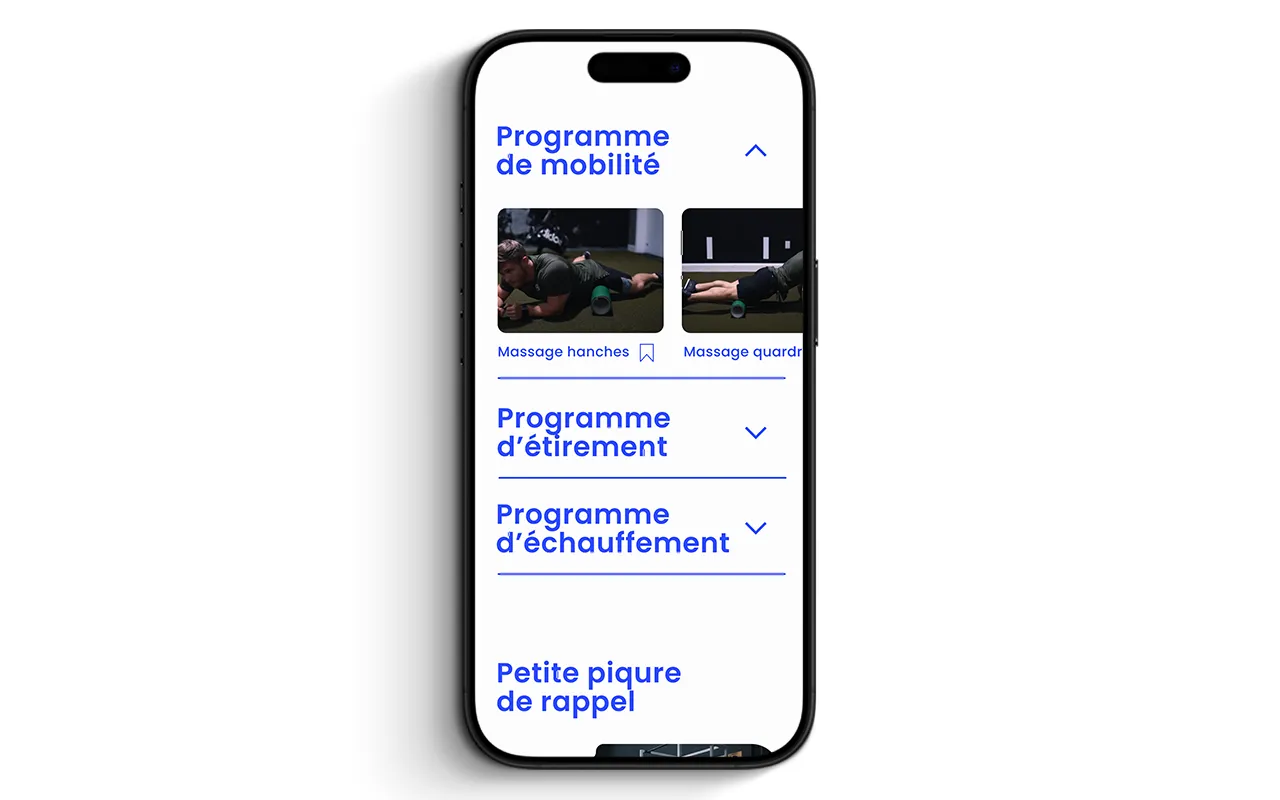
Questionnaire about the problematic exercise Questionnaire about the pain felt Pinning system and creation of personal programmes Dropdown presenting stretching, mobility and warm-up programmes Explanation of potential causes My conclusion I found the end-of-year project experience rewarding, as it put me in contact with an audience and helped me understand their expectations. Receiving feedback from this target audience helped me design a more relevant application while saving effort. This feedback also allows a better assessment of the relevance of the features we propose.
This project also allowed me to get to grips with Figma, a tool that was new to me at the time. I learned the basics of components and groups, as well as some prototyping concepts, which I was later able to develop further.